Gradient Fog
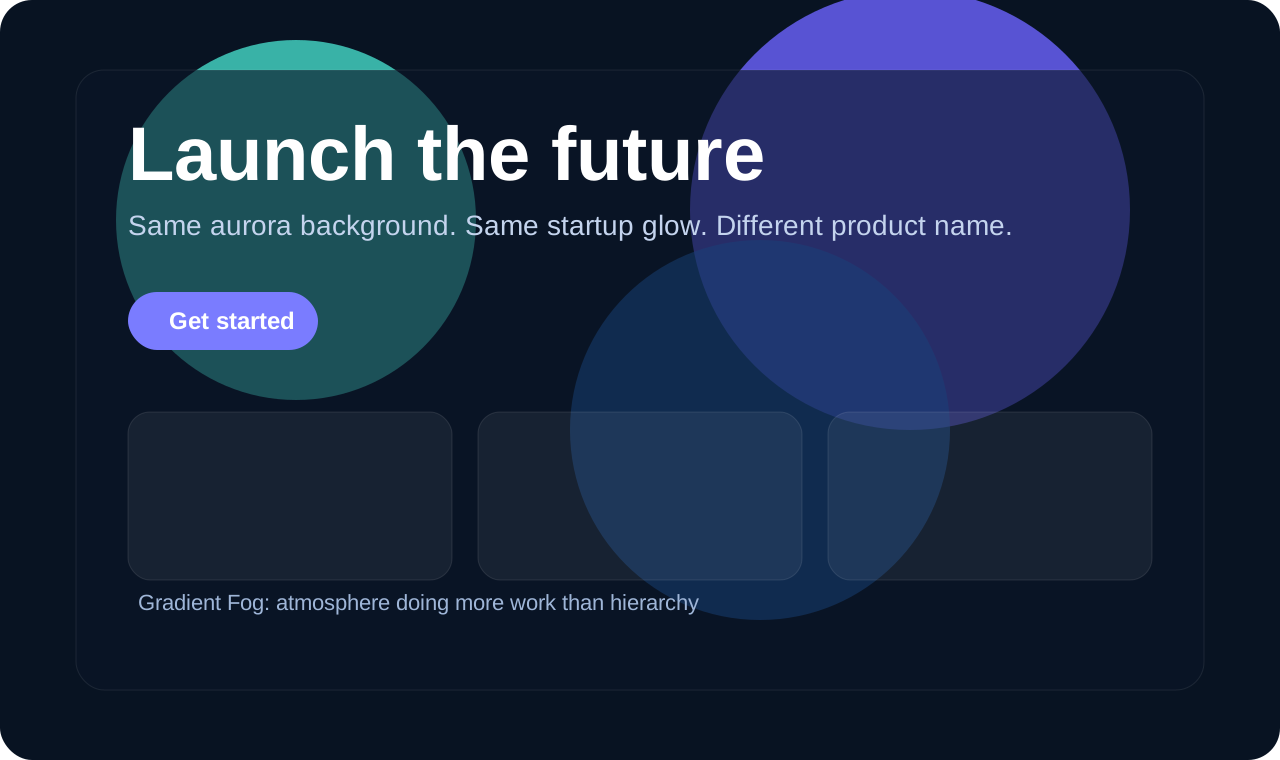
The default AI landing page weather system: cyan, violet, and blue blur blobs drifting behind a product that otherwise has no visual idea. Atmospheric depth standing in for hierarchy.
The Pattern
Ask an image model, site generator, or code model for a modern tech landing page and odds are high you get weather. Not structure. Not a concept. Weather. A navy backdrop with two or three luminous blobs diffusing into each other like somebody left the future on a low boil.
The smell is not “using a gradient.” Humans do that on purpose all the time. The smell is using the exact same atmospheric recipe to signal “AI / startup / innovation” no matter what the product is. Payroll app, note-taking app, database, crypto side project, same sky.
It works because it flatters weak thinking. If the background already looks expensive, the layout can stay generic. The blur suggests depth even when the page has none.
Visual Example
Examples
Why AI Reaches for It
Gradient Fog is cheap signal. It broadcasts “new,” “digital,” and “premium” without forcing the model to invent a visual metaphor tied to the actual product. It is the design equivalent of saying “transformative” in copy: instantly legible, instantly generic.
It also survives prompt compression. “Modern SaaS hero” is enough to summon the whole treatment because the pattern is massively overrepresented in recent startup design references. The model does not need taste here. It only needs averages.
And blur forgives. Weak composition, weak spacing, weak contrast, weak product storytelling: a luminous haze can make all of them feel less naked for a second.
Research Notes
The broad claim here is supported by a newer line of work on AI-assisted web design, not by a paper that names gradients specifically. The March 2026 UW / Microsoft Research paper on design homogenization in web vibe coding argues that LLM-based site generation pulls creators toward dominant, high-probability aesthetic conventions and makes first suggestions unusually sticky. Gradient Fog fits that mechanism well: it is a high-probability convention that reads “modern tech” fast.
On the trend side, Figma’s 2026 web-design roundup treats gradients as a baseline expectation rather than a novelty. That matters because once gradients become ordinary in the source material, AI systems stop using them as one option among many and start using them as default atmosphere.
The Webflow community gives the pattern away in a more practical way. “Aurora gradient” is a searchable, cloneable style category with heavily reused examples. The smell is not that designers ever use it. The smell is how quickly AI falls back to it when the prompt does not provide a stronger visual direction.
Where It Shows Up
Sources