Geometric Sans Monoculture
Inter, or something almost exactly like Inter, everywhere. Headline, body, UI, numbers, captions. One friendly neutral sans trying to carry the entire brand alone.
The Pattern
This smell is less about any one typeface than about the refusal to make a typographic choice with consequences. The whole site lands on one safe, clean, modern sans and then squeezes every job through it: authority, warmth, editorial texture, interface clarity, data legibility, all of it.
A human designer can absolutely build a brilliant system around one sans. The smell appears when the choice feels inherited rather than argued. The font is not saying anything. It is merely preventing the page from saying anything embarrassing.
That is why these sites often feel instantly usable and instantly forgettable.
Visual Example
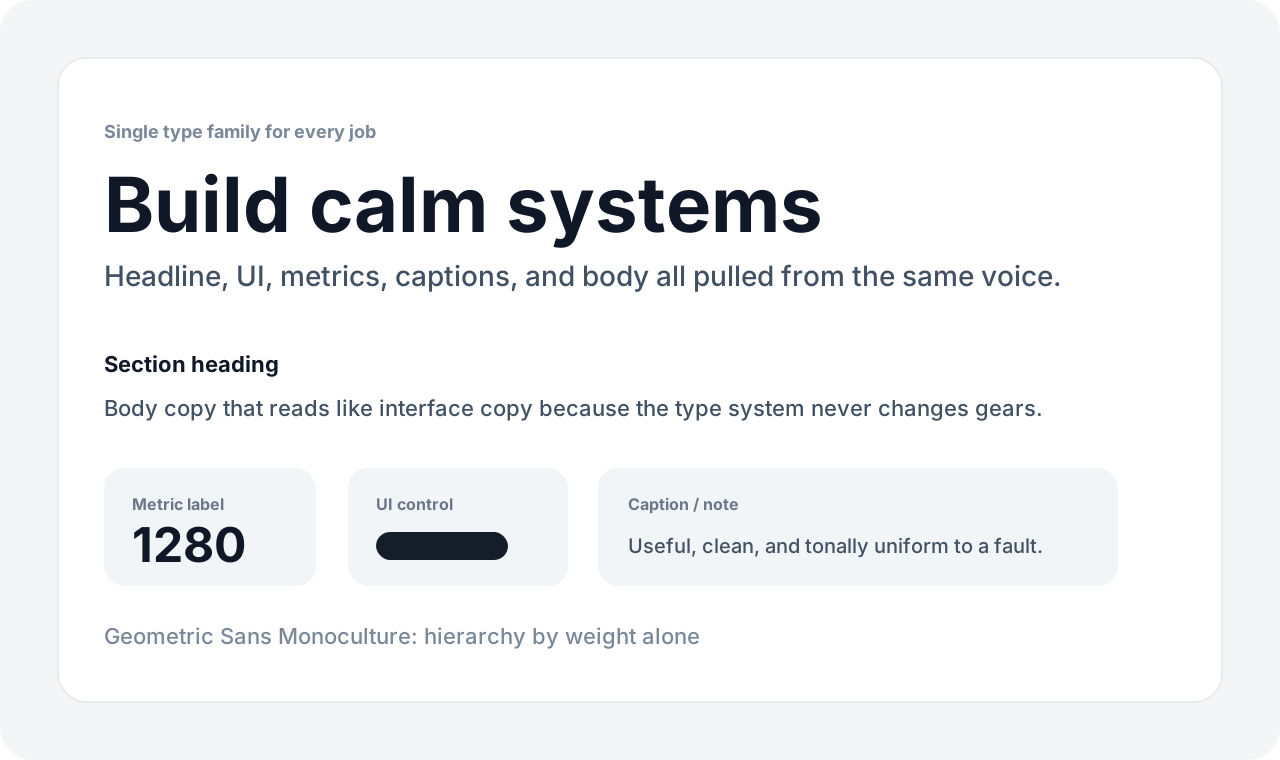
Examples
Why AI Reaches for It
Models have learned a huge amount of recent interface design from the SaaS web, and recent SaaS web has learned a huge amount from Inter. The result is a feedback loop where “modern” starts to mean “neutral sans with enough weights.”
It is also a convenient failure mode for code generators. One font token is easy to wire through a system. One font avoids clashes. One font makes responsiveness simpler. It is the safest possible typographic default when the model has no brand conviction of its own.
The problem is not cleanliness. The problem is monopoly. A type system with no contrast has no argument.
Research Notes
This smell is the easiest to document because Inter’s success is real and measurable. On the official Inter site, Rasmus Andersson describes it as a screen-first workhorse designed for user interfaces. The Wikipedia entry tracks just how widely that workhorse spread, noting that for the 12 months ending May 2025 Inter was accessed 414 billion times on Google Fonts, up 57% year over year.
Those numbers do not make Inter bad. They explain why it becomes the center of gravity. If a model is trained on large volumes of recent product design, it will see Inter and Inter-like sans systems everywhere. The 2026 web vibe-coding homogenization paper provides the bridge: AI generation tends to regress toward dominant conventions when the prompt does not force stronger choices.
So Geometric Sans Monoculture is not an anti-Inter complaint. It is an anti-default complaint. The stronger and more successful Inter becomes, the easier it is for AI to confuse “legible and useful” with “sufficient as a whole visual identity.”
Where It Shows Up
Sources