Bento Box Sprawl
Everything becomes a dashboard. Even simple marketing pages get chopped into evenly weighted rounded rectangles with eyebrow labels, micro-icons, and one stat per tile.
The Pattern
The bento layout can be great when the content actually wants modular chunks. The smell starts when the chunking itself becomes the idea. A story becomes six cards. A product explanation becomes nine tiles. A one-message landing page becomes a miniature operating system.
AI loves the pattern because it offers an easy answer to the hardest design question: what deserves emphasis? In Bento Box Sprawl, the answer is “everything, equally.” No hard hierarchy. No real pacing. Just a neat field of cards all asking for the same amount of attention.
The result looks competent from a thumbnail and exhausting at reading distance.
Visual Example
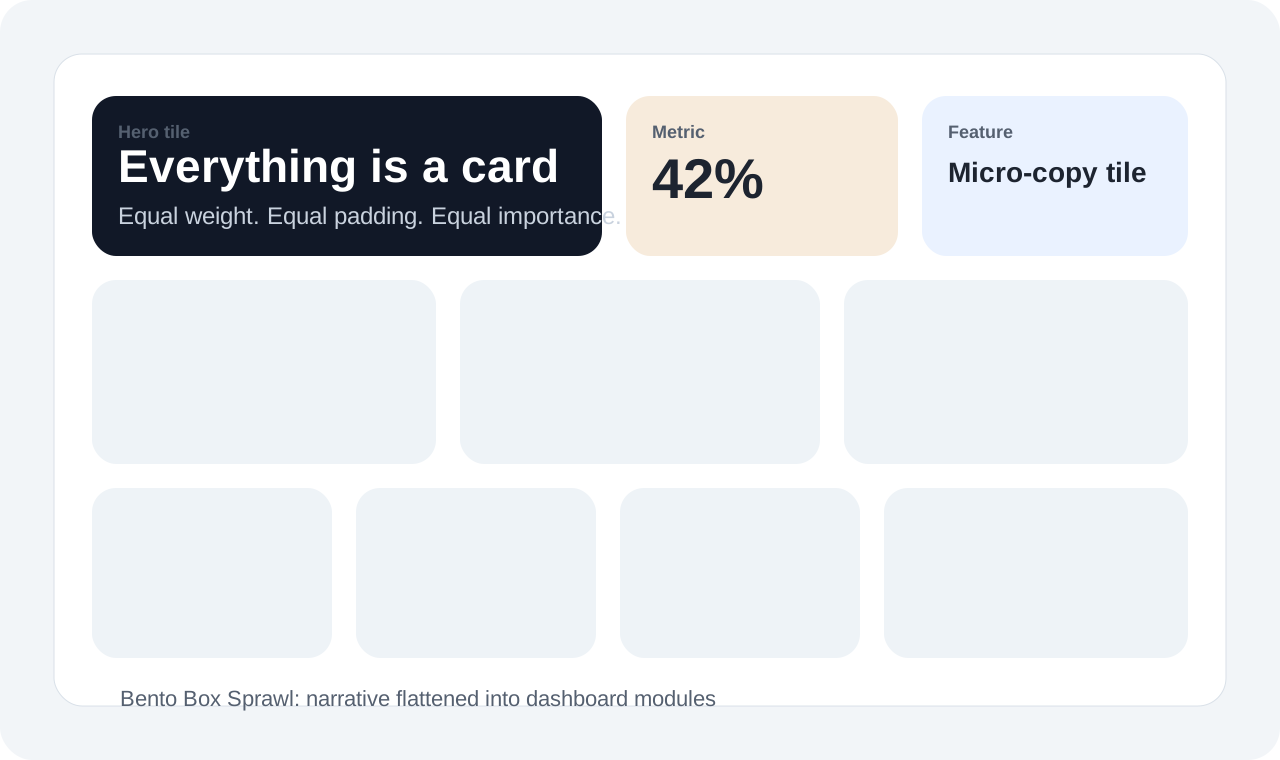
Examples
Why AI Reaches for It
Cards are compositional training wheels. They solve spacing, grouping, and responsiveness in one move. Models trained on modern product sites have seen this layout thousands of times, so once “clean SaaS design” is in the prompt, the grid is already halfway onto the canvas.
The pattern also plays nicely with auto-generated copy. If every section is one short chunk with one short headline, the model never has to make a bold editorial decision about rhythm or flow. It can just keep adding modules.
That is why Bento Box Sprawl often arrives with a suspiciously complete feeling. Not finished. Complete. Everything has been placed somewhere. Nothing has been prioritized.
Research Notes
Bento grids are a real design trend, not an invented AI hallucination. Both Obergine and Senorit describe the layout as a mainstream 2024-2026 pattern, usually tied to Apple-style feature storytelling, modularity, and CSS grid flexibility. That is precisely why AI reaches for it so often: the pattern is common, legible, and easy to reproduce from examples.
The smell begins when the trend mutates into a universal answer. The 2026 UW / Microsoft Research paper on web vibe-coding warns that AI site generation nudges creators toward dominant conventions and makes it cognitively expensive to push back. A bento layout is a perfect high-probability default because it solves many compositional problems at once.
So the argument here is narrow: bento grids are often good, but AI over-applies them. When every idea becomes a card, the page stops having argument structure and starts having inventory.
Where It Shows Up
Sources